
Fixing Toilet Leaks or Clogs
Toilet leaks and clogs are common household issues that can cause significant inconvenience and water wastage if not addressed promptly. Understanding the causes and solutions for these problems can help you maintain a functional and efficient bathroom.
Don’t let a stubborn clog or gushing leak become disruptive and unpleasant. Call Best Plumbers Perth at (08) 7099 0536 for immediate assistance and fast repairs.
This guide provides a comprehensive overview of fixing toilet leaks and clogs, tailored for an Australian audience.
Understanding Toilet Leaks
Common Causes of Toilet Leaks
Worn Flapper Valve: The flapper valve controls the flow of water from the tank to the bowl. Over time, it can wear out, causing leaks.
Faulty Fill Valve: The fill valve regulates the water level in the tank. If it’s faulty, it can cause the tank to overflow and leak.
Cracked Tank or Bowl: Cracks in the tank or bowl can cause water to leak onto the floor, leading to potential water damage.
Loose or Worn Seals: The seals around the base of the toilet and the tank-to-bowl connection can degrade, causing leaks.
Identifying Toilet Leaks
Check the Flapper Valve: Add a few drops of food colouring to the tank. If the colour appears in the bowl without flushing, the flapper valve is likely leaking.
Inspect the Fill Valve: Observe the water level in the tank. If it’s above the overflow tube, the fill valve may need adjustment or replacement.
Examine the Tank and Bowl: Look for visible cracks or water pooling around the base of the toilet.
Fixing Toilet Leaks
Replacing the Flapper Valve
Turn Off the Water Supply: Locate the shut-off valve behind the toilet and turn it clockwise.
Drain the Tank: Flush the toilet to empty the tank.
Remove the Old Flapper: Detach the flapper from the chain and the overflow tube.
Install the New Flapper: Attach the new flapper to the overflow tube and reconnect the chain.
Turn On the Water Supply: Turn the shut-off valve counter clockwise to restore water flow.
Adjusting or Replacing the Fill Valve
Turn Off the Water Supply: As with the flapper valve, start by turning off the water supply.
Drain the Tank: Flush the toilet to empty the tank.
Adjust the Fill Valve: If the water level is too high, adjust the float to lower it.
Replace the Fill Valve: If adjustment doesn’t fix the issue, remove the old fill valve and install a new one according to the manufacturer’s instructions.
Fixing Cracked Tanks or Bowls
Temporary Fix: Use waterproof epoxy to seal small cracks. This is a temporary solution, and the toilet should be replaced as soon as possible.
Permanent Solution: Replace the toilet if the cracks are severe or the temporary fix fails.
Replacing Seals
Turn Off the Water Supply: Turn off the shut-off valve and flush the toilet to empty the tank.
Remove the Toilet: Unscrew the bolts at the base of the toilet and lift it off the flange.
Replace the Wax Seal: Remove the old wax seal and replace it with a new one.
Reinstall the Toilet: Place the toilet back on the flange and tighten the bolts.
Understanding Toilet Clogs
Common Causes of Toilet Clogs
Excessive Toilet Paper: While seemingly innocuous, an abundance of toilet paper can quickly accumulate and create significant obstructions in the pipes, especially when using thicker, plush varieties.
- Non-Flushable Items: Despite being marketed as “flushable,” many personal care products like sanitary napkins and disposable wipes do not break down properly in plumbing systems, leading to blockages over time.
Foreign Objects: Curious children often inadvertently contribute to clogs by flushing small toys, nappies, or other objects that should never be introduced to the toilet bowl. Sanitary products are another common contributor.
- Tree Root Infiltration: In some cases, invasive tree roots can penetrate and damage sewer lines, creating major obstructions that may require professional intervention to resolve.
Low-Flow Toilets: Older low-flow toilets might not have enough pressure to clear the pipes effectively.
Identifying Toilet Clogs
Slow Draining: The water drains slowly after flushing, indicating a partial blockage.
Overflowing Bowl: The water level rises and overflows, suggesting a complete blockage.
Fixing Toilet Clogs
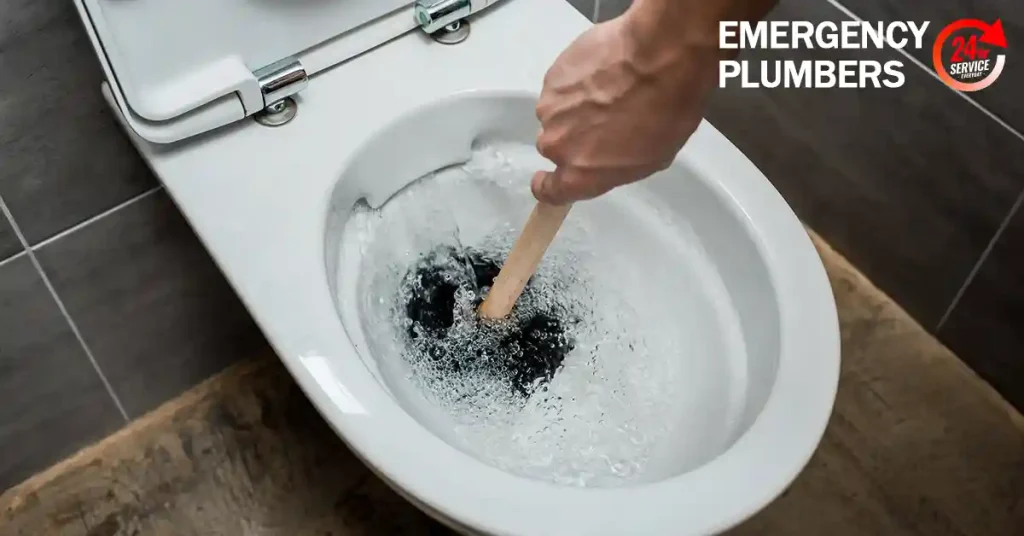
Using a Plunger
Select the Right Plunger: Use a flange plunger, which is designed for toilets.
Create a Seal: Position the plunger over the drain hole to create a seal.
Plunge Vigorously: Push and pull the plunger forcefully to dislodge the clog.
Test the Flush: Flush the toilet to see if the clog is cleared.
Using a Toilet Auger
For more information of how to use a roto-rooter, please refer to our article: Fix Plumbing Problems With a Roto-Rooter.
Insert the Auger: Feed the auger cable into the drain hole.
Crank the Handle: Turn the handle to push the cable through the clog.
Remove the Auger: Pull the auger out to remove the clog.
Test the Flush: Flush the toilet to ensure the clog is cleared.
Using a Chemical Cleaner
- Choose a Safe Cleaner: Select a toilet-safe chemical cleaner.
- Follow Instructions: Pour the cleaner into the bowl according to the manufacturer’s instructions.
- Wait and Flush: Allow the cleaner to work for the specified time, then flush the toilet.
Preventative Maintenance
- Clean the Bowl: Use a toilet brush and cleaner to keep the bowl clean.
- Check for Leaks: Regularly inspect the toilet for signs of leaks.
- Monitor Water Level: Ensure the water level in the tank is not too high or low.
- Use the Right Amount of Toilet Paper: Avoid using excessive toilet paper.
- Dispose of Waste Properly: Do not flush foreign objects or sanitary products.
- Educate Household Members: Ensure everyone knows what can and cannot be flushed.
- Scheduled maintenance: Schedule regular drain cleaning and inspections to identify and address potential issues before they escalate.
Conclusion
Addressing toilet leaks and clogs promptly can save you from costly repairs and water wastage. Whether it’s replacing a worn flapper valve, adjusting a fill valve, or using a plunger to clear a clog, understanding these basic repairs can help you maintain a functional and efficient bathroom.
For more complex issues, don’t hesitate to contact Best Plumbers Perth at (08) 7099 0536 to ensure your toilet remains in top condition.


