Menu

— Search by local councils
Perth Council
Below are the suburbs within the local council area of Perth. If you need professional plumbing services, we're just a phone call away.
| Crawley | Northbridge | West Perth |
| East Perth |
History of Perth Council
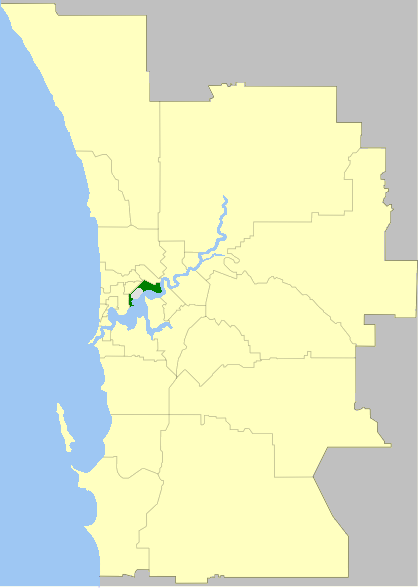
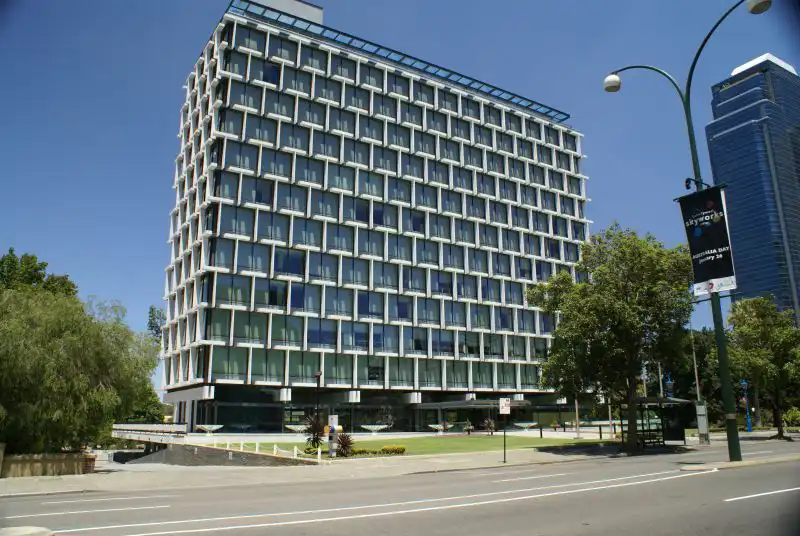
The City of Perth is a local government area in the Perth metropolitan region, the capital of Western Australia. Commonly known as the Perth City Council, it covers the Perth city centre and surrounding suburbs. The City spans an area of 20.01 square kilometers (8 sq mi) and had an estimated population of 21,092 as of 30 June 2015. On 1 July 2016, the City expanded, incorporating 1,247 residents from the City of Subiaco.
In 1829, Captain James Stirling founded Perth as part of the Swan River Colony. Although a Perth Town Trust was formed in 1838, it remained largely non-functional due to financial and administrative challenges, leading to its dissolution in 1858. The City of Perth was officially declared on 23 September 1856, with the Council convening for the first time in December 1858. In 1871, the City of Perth was reconstituted as a Municipal Corporation, marking a significant step in its governance.
The City experienced considerable expansion and development in the early 20th century. In 1915, it absorbed the Municipality of North Perth and the Municipality of Leederville. On 1 November 1917, the Municipality of Victoria Park was also integrated into the City. Additionally, the City acquired land from the Perth Road Board and developed suburbs such as Floreat Park, Wembley Park, and City Beach. The 1925 City of Perth Act further empowered the City with additional building control and regulation authority, leading to the establishment of its first town planning committee in 1930.
Despite its growth, the City faced governance challenges, which culminated in a Royal Commission in 1938, spurred by criticism from the state’s Town Planning Commissioner. By 1962, the council had expanded to 27 members representing nine wards. The City’s first town planning scheme, submitted in 1973, was not formally adopted until 1985 due to state government interventions aimed at reducing discretionary powers perceived to be influenced by developers.
On 1 July 1994, the City of Perth underwent significant restructuring following the passage of the City of Perth Restructuring Act (1993). This led to the creation of the Towns of Shepperton, Cambridge, and Vincent from the former boundaries of the City. The City of Perth Act 2016 redefined Perth as the capital of Western Australia and expanded the City’s boundaries to include landmarks such as Kings Park and the University of Western Australia, effective 1 July 2016.
Governance issues re-emerged in recent years, with the Perth City Council being suspended on 2 March 2018, pending a public inquiry initiated by Local Government Minister David Templeman. The Council was administered by three Commissioners until 18 October 2020. Despite the two-year inquiry costing nearly A$8.0m and uncovering numerous findings, no criminal convictions resulted.
In a significant cultural acknowledgment, the City of Perth formally recognized the Whadjuk Noongar people as the traditional owners of the land known as Boorloo in July 2021. An agreement, “Yacker Danjoo Ngala Bidi,” was signed with Whadjuk elders on 10 August, marking an important milestone in the City’s efforts to honor and integrate the heritage and contributions of the Noongar people into its civic framework.
Source: https://en.wikipedia.org/wiki/City_of_Perth